|
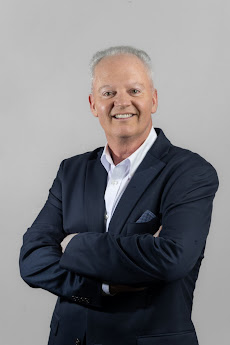
| Dr. Ben Scafidi speaks at #Amplifychoice 2015 on the unusual economics of School Funding |
At the recent #Amplifychoice event held in Atlanta this past
weekend, sponsored by the Franklin Center for Government and Public Integrity,
several interesting presentations were given by multiple subject matter
experts.
One especially interesting presentation was given by an
individual that knows a lot about economics and school choice.
Dr. Ben Scafidi gave a riveting lecture on the economics of
school choice on Friday afternoon. Dr.
Scafidi, whom I had previously had the opportunity to meet and speak with a few
years back at a conference in Milwaukee, is a professor of economics at Kennesaw State University. In addition to this, he‘s also a senior fellow with the
Friedman Foundation for Educational Choice and also the director of education
policy for the Georgia Community Foundation, Inc.
Dr. Scafidi wrote the bombshell report The School Staffing Surge: Decades of
Employment Growth in America’s Public Schools and he co-authored the
very influential report from 2013 More than Scores, an Analysis of Why and How
Parents Choose Private Schools.
In these reports, Scafidi detailed the troubling phenomenon of ever
expanding public educational hiring of non-instructional employees and also the
reasons why parents take such an active interest in choosing where their children
attend school. And these reports are
amazing documents that every education policy-maker in America should read.
But the subject of discussion at this week’s event was the
money behind education and the non-standard economic explanations those in
public education try to give when discussing their financial challenges. “The fact of the matter is that spending on
education has risen dramatically in the U.S. since 1970, yet the vast majority
of the spending increases have paid for increases in non-instructional and
administrative school employees” said Scafidi during his presentation.
 |
| Data courtesy of Dr. Ben Scafidi |
He went on to describe the strange phenomenon
that occurs when some educational administrators talk budgets. “They’ll try to convince you on one hand
that, even if their enrollments are declining, they cannot take budget
decreases because all of their costs are fixed costs” Scafidi said. “But this is simply not true from an
economics perspective—and if it were—how do we explain the appearances of these
same administrators at legislative committee hearings clamoring for more and
more money to cover the costs of enrollments that rise?” Scafidi asked rhetorically. “They wouldn’t need more money if all of
their costs were fixed—and this disproves the very arguments they try to make when
their enrollments drop” he quipped.
An interesting and unique thing happens in publicly funded
education—a practice that occurs nowhere else and in no other occupation in
America according to Scafidi.
In
environments of declining enrollments in school districts, according to
Scafidi, policy makers still oftentimes fund school systems for students
(customers) that are no longer even in such schools. “You’re paying to serve customers that are no
longer there!” Scafidi pointed out, with emphasis, to the wide-eyed room full
of attendees. “What other industry has this as their business model?!”
Taking the long view, Scafidi points to some amazing numbers
and some startling conclusions. “Since
1950 public school enrollments have increased nearly 100 %, but staffing has
increased at almost four-times this rate-but H.S. graduation rates have
remained flat despite all of this spending” he stated.
According to Scafidi, the increases in educational/academic
attainment do not match the massive