|
| I toured IP's facilities in Cantonment and Beulah yesterday--and I learned a lot about this company in the process... |
My meeting with IP staff was very cordial yesterday afternoon. It started with introductions around a large conference room table. They knew me, so they wanted me to know THEM.
Scott Taylor is the mill's manager, has been with the company for 17 years, and moved to the area about two years ago. Laurie Mclean is the mill's Environmental Health and Safety Manager. A chemical engineer by trade, she has been with the company for 19 years. Randy McRae, a senior Regional Manager for Government Relations covering the states of Mississippi, Georgia, Alabama, and Florida has been with IP for 33 years. Whitney Fike, the IP Internal and External Communications Officer, is a native of Escambia County's Cantonment area and has been with IP for the last three years. This was the group that gave me a presentation, a mill tour, and a tour of IP's wetlands area.
The first part of my visit consisted of a discussion about IP's corporate culture, values, objectives, strategies, revenues, market segments, and corporate goals. It was interesting.
The company had over 52,000 employees in 24 countries around the world and they produced $23 Billion in total revenue in 2018, with three core areas of specialty products. Papers account for 19% of product revenue, Industrial packaging accounts for 69%, and Global cellulose fibers make up 12%. They create boxes for Tyson foods, Amazon, Little Caesars Pizza, and many other retailers. Their cellulose fibers are used in Pampers Diapers and multiple brands of the fast growing market of adult incontinence products. "That is a growing segment of our market, particularly overseas" said Mr. McRae. "That's pretty depressing for those of us getting older." I quipped.
As it pertains to IP's impact on Pensacola specifically-I was told that IP directly employs 500 personnel and another 100 contractor personnel. The group provided information claiming a local economic impact of $250 Million yearly in the Pensacola area.
After the corporate information powerpoint, Laurie Mclean went through about twenty slides focused on the company's environmental compliance efforts. This was interesting, and a lot of it was NEW information to me. Several of the slides were extremely informative, so naturally I asked for a copy. "Can you just send me this presentation?" I asked. "Unfortunately we cannot send this outside the company--as it contains proprietary information." was the response. This was disappointing, like when I was told I could not take any pictures or videos on their property during my tour (
as I mentioned in part I). We went through many of the issues with which I was familiar: the previous issues with obtaining their permit in 2010. The re-routing of their effluent from 11-Mile Creek to their own private wetlands beginning in 2012 via a long pipeline they own jointly with ECUA, and the problems with their current permit--which has been administratively extended. One slide in particular captured my interest: "This is probably the most profound data I have seen yet." I told them. It is one slide I certainly would have taken a picture of and spotlighted in this post if I would have been permitted to do so. Essentially, it was a slide that depicted the health of Perdido Bay graphically, as measured by a number of key environmental metrics, from the late 1980s through 2019. It looked like a bell curve, with the highest levels of contaminants in Perdido Bay representing the top of the "curve." The bay was in the worst health of all in 2000--according to this chart. "That's the year we took over this plant from Champion" mused Mr. McRae. But the interesting thing to note was that from that point forward--this chart showed a straight downward trend line (with dramatic drops from 2012 forward) through 2018---with contaminant levels in 2018 back down to the levels of the late 1980's levels.
"Why are you all not putting this slide out in response to the attacks from the media and the Pensacola News Journal---did you not see last Sunday's cartoon and hit piece in the PNJ?" I asked. There really was not a good response to my question, though. The group just looked back at me with subdued, almost somber expressions. I must surmise that IP's corporate offices prefer to not directly engage/challenge inaccurate information. My personal feeling on that--seeing the way they are attacked unfairly almost weekly by our newspaper--is that this strategy is not working from a PR standpoint. But that's their decision to make.....
Several other slides were presented, specifically on their wetlands project where they send their effluent. According to the staff, the plant species that have been introduced out there have thrived over the last 7 years. "We measure for biodiversity, we measure the growth of the trees we plant, and we spend about $300,000.00 yearly just on testing out there and in Perdido Bay," said Mrs. McLean. I was shown a montage of pictures taken at the wetlands showing the flora and fauna. "We have all kinds of animals out there--including threatened and endangered plant and animal species like the Pitcher Plant, the Bald Eagle, and the Gopher Tortoise. We have documented over 160 different bird species out there." She continued "We have a former employee who is in the Audubon Society--and we let him go out and bird watch. In exchange, he sends us photos like these." The screen then flashed multiple pictures of birds, plants, alligators, foxes, bobcats, and other wildlife from their wetlands and reserve property in Beulah just north of Perdido Bay. As we finished going through the presentation in preparation for our tour, several facts of note were presented that are worthy of mention here--to include the following:
-IP has spent $94 Million Dollars on their pipleine, wetlands, and water treatment facilities in Escambia County in an effort to achieve total compliance with their discharge permit to comply with the CWA.
-IP operates lawfully on an administratively extended permit from DEP.
-IP spends about $300K yearly on testing and monitoring for environmental compliance locally
-IP utilizes reclaimed water from ECUA for their processes, recaptures and re-uses much of this water on site, and burns off much of this water before discharging what remains through their pipeline.
-IP could utilize potable water from the area's aquifer for its production processes, however they chose to use treated ECUA water instead to ease the burden on the aquifer.
-ECUA pumps millions of gallons of water through the pipe to IP's weltlands as well--as much as 5 Million Gallons Per Day (MGD)--in addition to what IP sends out.
-ECUA's treated water has consistently failed the same toxicity test (chronic) on the water flea.
-ECUA stopped performing the toxicity tests last year on its treated water which it provides to IP for use in their production facilities.
-The nexus between IP's failure in the chronic toxicity test at the end of the pipe and the utilization of this reclaimed ECUA water (which also fails the same toxicity tests consistently) for their production processes has not been fully understood as of yet.
-IP successfully demonstrated their ability to pass the chronic and acute toxicity tests utilizing water from the second berm of their 3-berm polishing wetlands in 2013.
-Similar wetlands to IP's in the region and locally do not have this species of water flea (Ceriodaphnia dubia) naturally occurring--due to the pH levels that do not sustain this life form in these nearby waters. Yet this is the species IP is mandated to utilize for this toxicity testing.
-The Water Flea survives in the 100% effluent; the reason the chronic toxicity test is considered a "fail" is that the water fleas in the effluent water do not reproduce at the same level as the control water sample--but the fleas live and reproduce in both the test and the control water.
Eventually, after we went through the very thorough environmental presentation, and an equally comprehensive safety presentation, and got completely "geared-up" with Personal Protective Equipment (PPE)--including ear and eye protection, hard hat, and safety vest--I was given a tour of the mill's production facilities. The size of the machines that press and roll the paper was incredible! Inside the production area, where I was given a tour, the temperature was over 115 degrees fahrenheit!
"We have fans for the employees, and we take lots of hydration breaks, we have water stations stacked." said Scott Taylor. I noted several buildings within buildings on the production floor, with tinted windows, lots of flat screen computers and control panels. Each of these enclaves was air-conditioned and comfortable, and the ones I was shown had two or three personnel inside monitoring the production.
At the end of the lines--huge, massive rolls of brown paper and white cellulose fibre roll off onto conveyor belts. As I watched the giant brown rolls of paper go by on the belt, I asked Scott if these ever "roll off..." Not very often, but unfortunately sometimes they do. You wouldn't believe how heavy these rolls are. You never want to be between one of those rolls and any structure--because that's how very serious injuries occur," he stated. After I was introduced to many of the personnel, we completed our mill tour and were off for our tour of IP's wetlands and conservation lands further south in Beulah.
THE WETLANDS
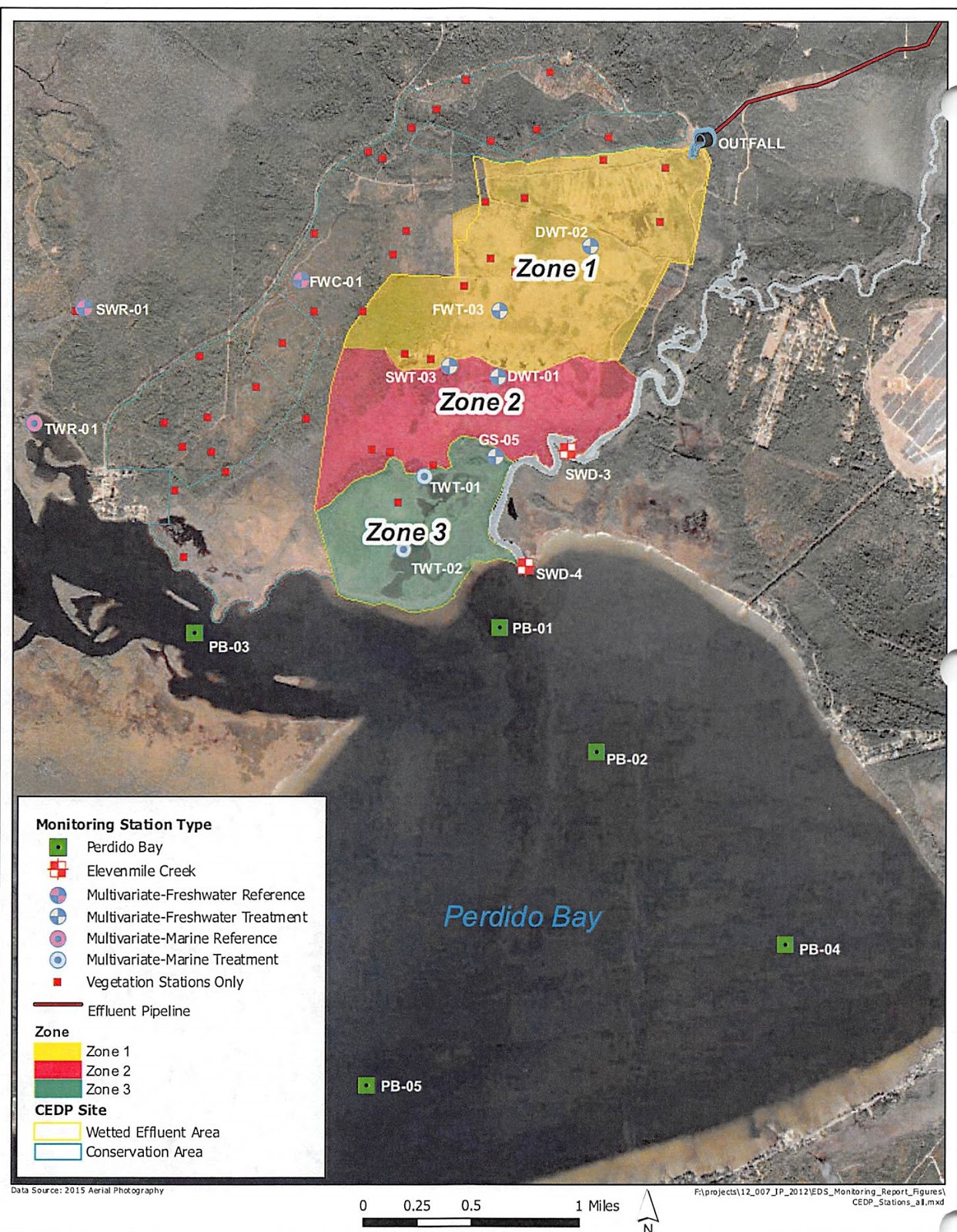
We caravaned from IP's Cantonment facility down Muscogee Road to Beulah road, where we made a left turn and traveled south to IP's conservation and wetlands property--where the 27 million gallons of effluent flows daily from IP's mill and eventually into Perdido Bay. It was a short drive, and upon our entry onto IP's Beulah property off of Hurst Hammock Road (through a locked gate), we were greeted by Mark, the forester who manages this property for IP. I left my truck at the gate and we all jumped into the large SUV that IP personnel brought, and we drove through the conservation land and into the first berm area of the wetlands. Along the way Mark pointed out numerous pitcher plant areas, sections of the forest where IP conducts controlled burns, and numerous Gopher Tortoise burrows. "We started out and found two tortoise burrows--now we're up to 23. These are a threatened species," he said. We stopped and exited the vehicle at numerous points and Mark proudly pointed out areas where trees and other plants had been planted. Areas that would eventually be inundated with water from the discharge were built up into a series of small round islands where 7-9 different species of plants and trees were planted on each little island according to mill manager Mark Taylor. As we continued deeper into the woods, we came upon a clearing that subsequently led to the end of the discharge pipe. "Here we are, let's get out and take a look around," Taylor said.
As I walked up to the concrete structure and up to the top of the platform, I looked down and observed a torrent of water cascading out of the pipe, across a 20 foot concrete platform that has "stairs" stepping down on either side. This water was somewhat murky, but the smell was not overwhelming to me--I expected it to be much worse. As the water flowed down, it went into a large canal that runs parallel to the berm on one side. The water was alive with bream and bluegill--I saw multiple bass swimming in the water from the bank. As we traveled down the berm, Mark told us "There are hundreds of Alligators out here. We actually see more of them in the winter. They come out and lay on the road and soak up the sun in the middle of the day--sometimes a dozen or more at a time." We drove the length of that berm, stopping from time to time to look at various things. Mark told us about some of the wildlife that is out in this 1400 acre property "We have Bear, Deer, turkey, wild boar, bobcats, all kinds of animals out here," he exclaimed as we drove down the road along the berm. I asked if I could take some photos of the pipe and the water, and Whitney Fike took some photos with her camera. "By Tuesday we should have the clearance to send you these," Scott Taylor said.
I had hoped to see much more of the wetlands, but much of it is inaccessible by car. "In order to get down to the area adjacent to Perdido Bay-we would need to have a boat for that," the group explained. But I felt like I saw a lot of the first stage of the polishing wetlands. I was curious about all the green covering along much of the canal. "Is that algae?" I asked. Actually it is not algae I was told but rather a huge growth of a small plant called "Duckweed". "It is abundant out here this time of year," said Mark. Some takeaways I observed from travelling through this area:
-The IP Wetlands areas I looked at yesterday appeared healthy--with plants, trees, and shrubbery that seem to be thriving. I'm definitely not a scientist, but this is what it looked like to me...
-Several areas of this wetland and conservation area are being thinned via controlled burns (these, I would assume, are the brown/dead looking areas of the woods from the satellite photos that have been making the rounds on social media)
--The "Islands" within the wetlands are dotted throughout the area, in almost a grid-like pattern; these have 7-9 different plant species each. I believe these "islands" are the round circles in patterns that some drone footage pictures on social media have portrayed (that look like a grid or checker-board pattern).
-The water in the canal at the first stage of the pipe outfall is full of fish and insect activity.
-Much of the water is covered with Duckweed--which I am certain is the green in the water from the satellite pictures that have been displayed on social media (although I have no way of knowing if there is also algae present in the area)
-Paper mills in other areas of the country that discharge into bodies of water that flow (rivers and streams) have an easier time passing the toxicity test (s) because their test water can be diluted in a commensurate percentage with fresh water in an amount and in a proportion that aligns with the body of water in which the effluent will be discharged (e.g. if an effluent is to be discharged into a large river, as little as 20% of process water will be used as the "test" sample). IP in Pensacola, however, must use 100% effluent for their test because the effluent goes into a wetland environment.
-The exact time it takes for the effluent discharge water, or "sheet flow" to travel from the end of the pipeline at the beginning of IP's 1400 acre wetlands area to the northern portion of Perdido Bay is not known precisely. While on the tour, I was told by IP personnel it is estimated that it takes between 2- 4 days for this to occur.
Although I don't pretend to be an expert on any of this, because I am not, I did commit a significant amount of time and energy in reading about this issue, researching the history of this problem, meeting with FDEP, county personnel, and now with IP personnel. My reasoning for doing this is/was to learn as much about the issues surrounding IP's permit process as I can. I appreciate IP's time and willingness to show me their operations, I appreciate county staff's time and research, I appreciate the citizens that are passionate about the environment (I am too) and I appreciate the personnel from FDEP who met with me and answered my questions on this matter.
I'll close this post by saying that of course I can be criticized by the PNJ cartoonist, that comes with the territory of being an elected official in Escambia County. But I'll also say this: I now know a lot more than the PNJ and Andy Marlette do about this process and the FACTS surrounding this whole evolution----- because I took the time and effort to learn about it firsthand from multiple sources and points of view. Meanwhile, as PNJ hurls insults at us-- they, themselves-- remain unwilling to take the tour of IP's facilities in order to learn about these issues firsthand.
I hope people that may disagree with me on this issue at least see this fact.